Challenging the Fossil Fuel Industry: a century long journey against the tide of waste materials
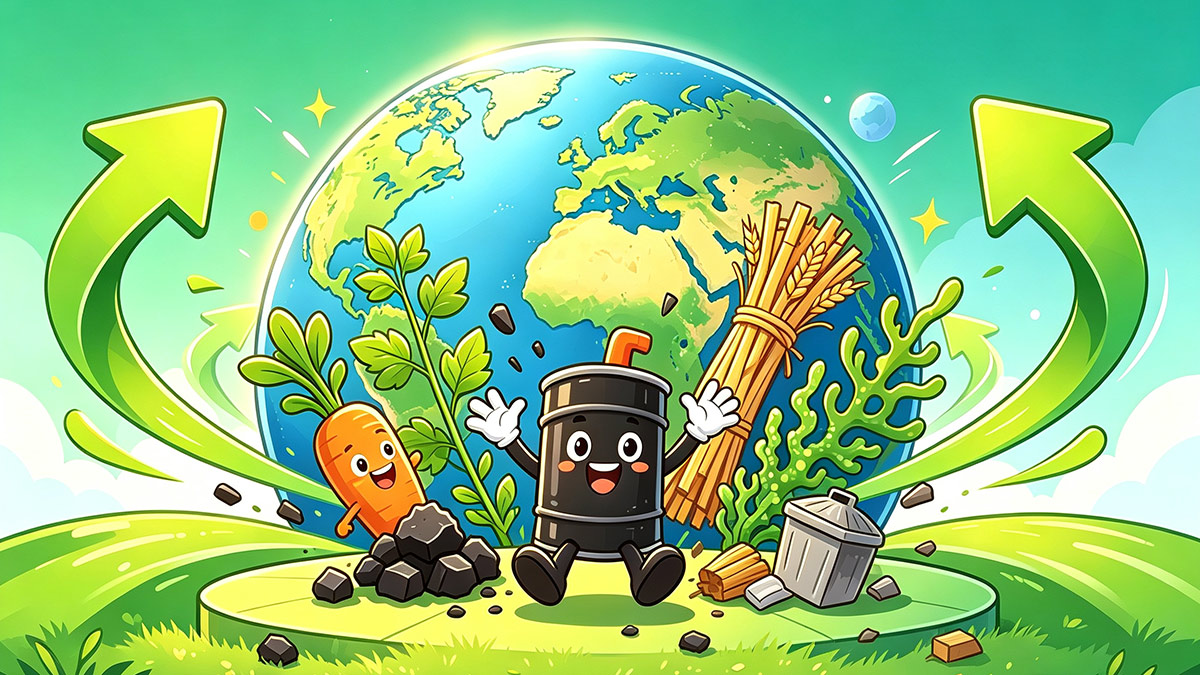
Have you ever thought that plants, animals, and even the garbage we throw away can all be turned into fuel? This may sound like a plot from a science fiction movie, but in fact, humans have been using this practice for centuries.
Biomass, which refers to organic matter derived from living organisms, remains an important source of fuel in many countries to this day. Even before the mid-19th century, it was accounted for the largest proportion of annual energy consumption in the United States. Later, with the rise of oil, biomass once faded into the background; But as the problem of global warming becomes increasingly severe, people have once again turned their attention to it.
When it comes to biofuels, ethanol is probably the most familiar to Americans. As early as the early 19th century, ethanol was still called "oil spirit", but later people discovered that it could be used in internal combustion engines, which gradually became popular.
It first replaced whale oil for lighting, and then was squeezed out by petroleum fractions. At the end of the 19th century, ethanol began to be used in transportation, but the good times did not last long. In the early 20th century, fossil fuels completely dominated, and this situation only began to shift today due to climate issues.

It is interesting that although wind and solar energy are clean, they cannot be directly converted into liquid fuels that cars can use - this is where biomass is irreplaceable.
Of course, turning biomass into fuel is not that simple. The more complex its chemical composition, the higher the conversion cost. According to different raw materials and processes, biomass that can be used to produce fuel is divided into three generations.
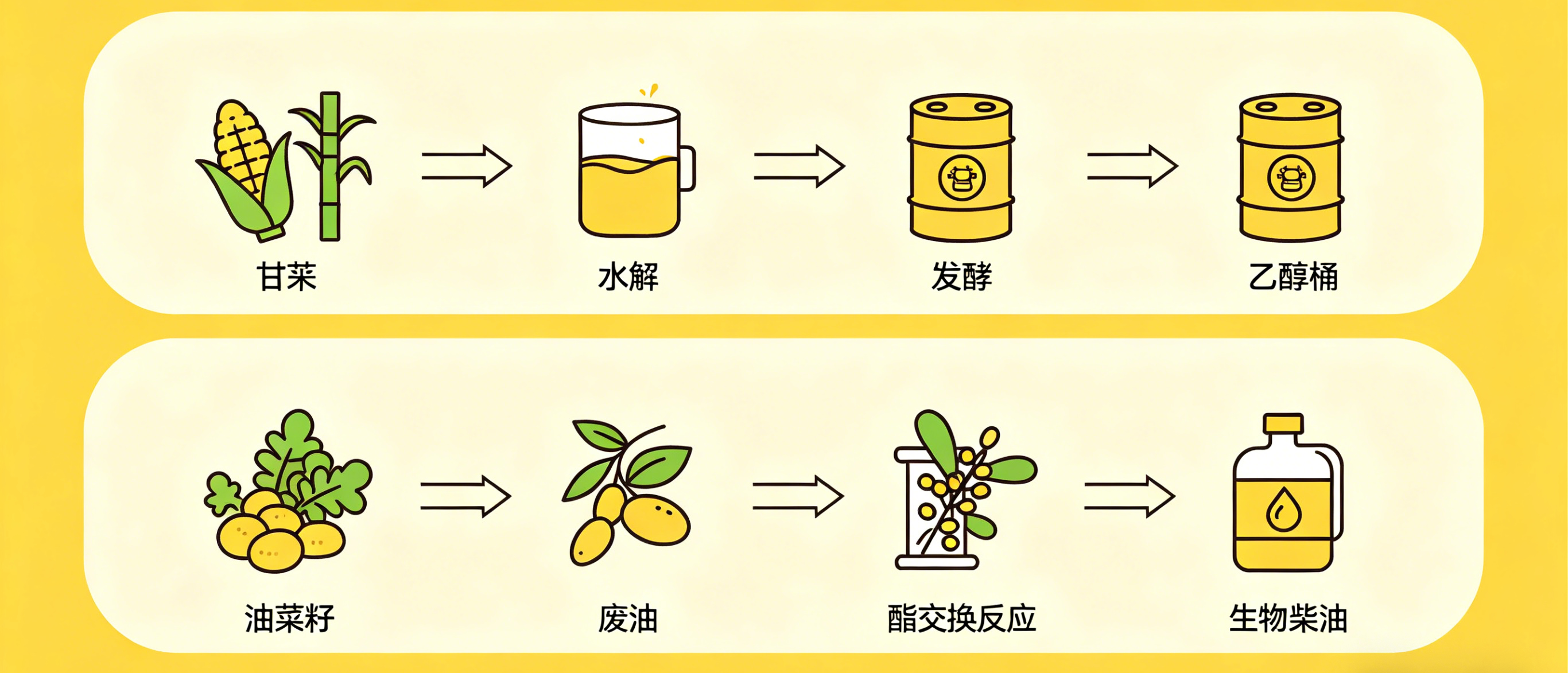
The first generation of biomass was derived from edible crops such as corn and sugarcane
The "trick" of turning sugarcane into fuel is very simple: extraction of juice, purification, and fermentation, which turns it into ethanol. Corn is a bit more complicated, as starch needs to be hydrolyzed into sugar first before fermentation.
There is also a type called biodiesel, which mainly comes from various oily seeds and plants, even including waste oil. Its production process is called "transesterification" - breaking the chemical bond between long-chain fatty acids and glycerol, and then replacing glycerol with methanol. So the price of methanol has a significant impact on the cost of bio-diesel.
However, the issues with the first generation biomass are also evident. These raw materials compete with grain for land and water, and can also lead to fluctuations in grain prices. Sugarcane is used as both sugar and fuel, with both sides pulling and tugging at each other.
The International Energy Agency predicts that the global land area used for growing energy crops will increase by three to four times in the next few decades, with North America and Europe experiencing particularly rapid growth, causing many people to worry about deforestation.
In addition, the process of using first generation biomass to produce fuel is still a "water guzzler" -70% of the world's freshwater is used for agriculture, and for every 50 million gallons of biomass ethanol produced, about 200 million gallons of water are consumed, which is roughly a ratio of one to four. Water scarcity may become a bottleneck earlier than land.
Due to these troubles, people have turned their attention to second-generation biomass.
The second generation of biomass no longer uses grains, but instead uses non-food wood cellulose, such as wood chips, agricultural and forestry waste, and even municipal solid waste. These raw materials are cheap and do not compete with grain. However, the downside is that the conversion process is much more complex and requires more advanced technology.

There are two main ways to produce fuel from second-generation biomass. One way is the "heat treatment method": heating biomass to 550°C to 750°C and obtaining bio-oil through pyrolysis; If the temperature is raised higher, the process becomes gasification, and the main product is synthesis gas, which also produces bio oil and biochar. Biochar has been very popular recently because it can sequester carbon.
The second path is somewhat similar to the pulping technology of papermaking, which extracts cellulose from lignocellulose. The difficulty lies in minimizing energy and chemical consumption while removing inhibitors. Here we have to mention a "valuable material" - lignin. It is the second most abundant natural polymer in wood and plants, and can be used not only as a biofuel, but also as a biochemical, adhesive, and even as a substitute for asphalt in road paving, reducing greenhouse gas emissions. Even paper mills have started using it as a low-carbon energy source.
The third generation of biomass is even more powerful: algae, sometimes also referred to as "algae oil".
The growth yield of algae is about ten times higher than that of second-generation biomass raw materials, and it does not require specific land types and can grow in non-cultivated areas or even in the ocean. It can produce ethanol, butanol, bio-diesel, propanol, gasoline, and so on. People generally choose species with high lipid content, such as Chlorella vulgaris. Even better, algae can capture carbon dioxide from emissions or air with a capture rate of up to 99%.

There is a startup company in Puerto Rico that specializes in collecting seaweed and turning it into carbon neutral products, such as bio-stimulants, emulsifiers for cosmetics and pharmaceuticals, and even bio-leather for the clothing industry. Doesn't that sound cool?
However, third-generation biomass-to-fuel technology also faces its own challenges. Extracting lipids from water requires appropriate technology, and the water must be filtered out before extraction. Furthermore, once scaled up to industrial levels, water consumption remains high. Therefore, this technology is still in its early stages and requires further research and investment.
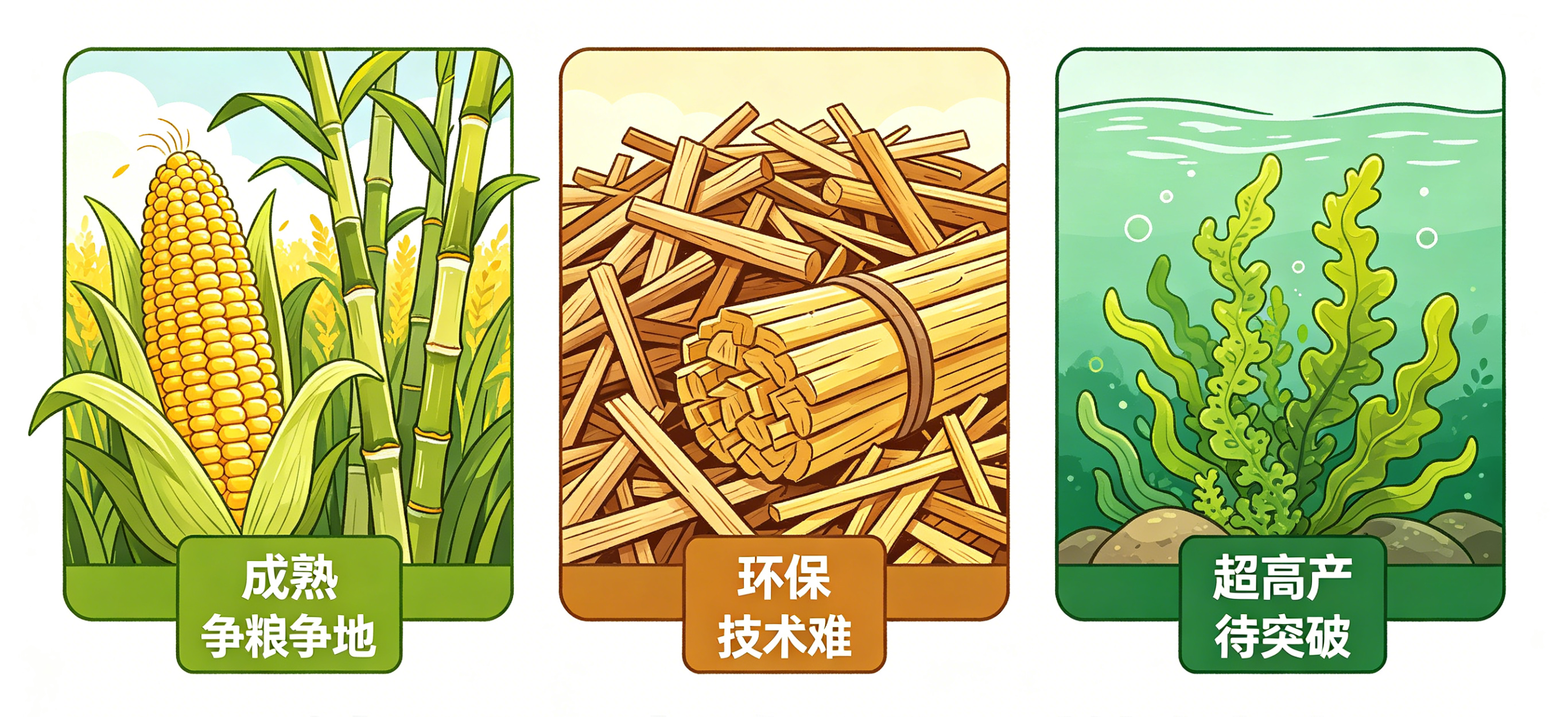
As you can see, each generation of biomass technology has its own advantages and disadvantages when it comes to producing green fuels. First-generation technology, while mature, competes with food crops and arable land for resources; second-generation technology, though inexpensive and environmentally friendly, involves complex processes; and third-generation technology, while holding great potential, is not yet mature.
In the future, achieving clean fuel conversion will likely require more than just one generation of biomass technology; rather, all three generations will need to work together. After all, the world has no other choice but to continue down the path toward more environmentally friendly fuels.